If you’re here checking out our Premium Series displays, chances are you’ve already dealt with the headache of budget screens that fall apart when you push them a little too hard. Maybe you’ve watched a movie only to notice banding across the frame mid-action, or zoomed in on a work graphic just to realize the fine text got smudged, or used a screen in direct sunlight and ended up squinting through a glare so bright it hurt your eyes. I get it—been there, as someone who’s been supplying premium displays for over a decade, not just selling a product, but knowing what actually makes a display worth the “premium” label. Premium Series

Let’s cut the jargon first. When someone asks “what’s the display quality of the Premium Series?”, a lot of brands will throw around terms like 100% DCI-P3, 178° viewing angles, or 1200 nits peak brightness like they’re magic numbers. But here’s the thing: those numbers don’t mean jack if they’re not measured consistently, or if the actual in-use performance doesn’t match the spec sheet. Our team tests every single panel that goes into the Premium Series before it leaves our warehouse, not just a sample batch for marketing photos. That’s the part most suppliers skip, but as someone who’s built this business on repeat customers, it’s non-negotiable.
First up: color accuracy. A lot of mid-tier displays will hit their color targets when the techs are testing in a dark lab, but move them to a bright office or a living room with windows, and the colors flatten out. The Premium Series uses factory-calibrated panels that hold their color through any ambient light—no matter where you set the screen, red stays red, skin tones look natural, and that forest green in your brand’s logo doesn’t turn neon lime halfway across the room. We test this with real-world use cases, not just the controlled charts: I’ve seen small business owners use our displays for product photos, photographers editing RAW files, even streamers who need their on-screen overlays to match what their viewers see. If a color is off by even 2 delta E (the industry threshold for “imperceptible to the human eye”), we reject that panel. No exceptions.
Next, brightness and glare resistance. This is where so many premium labels lie. A screen that’s 1500 nits peak sounds great, but if it’s a glossy panel, sunlight will bounce off it like a mirror, and you’ll still struggle to see content. Our Premium Series uses anti-glare IPS panels with adaptive brightness that adjusts based on the actual light in the room, not just a cheap ambient light sensor that overshoots or undershoots. We’ve tested this in everything: 2PM sunlight on a storefront window, dim conference rooms, even basements with string lights. A few months back, a client from a chain of convenience stores told us their employees could now read inventory labels on the screen outside during midday—something the old budget screens they used couldn’t do. That’s the real win, not just a spec number.
Viewing angles matter too, and this is another spot where budget displays fail. If you’re gathering a group of people around a screen—for a team meeting, a movie night, a trade show demo—no one should be leaning in sideways to see the whole frame. The Premium Series has 178° viewing angles, which means even someone standing 10 feet off to the side won’t see distorted colors or washed-out edges. We tested this last quarter with a trade show client who needed displays for their booth; attendees would walk past, stop, and say “wait, that looks the same no matter where I stand,” which translated to more demos and more sales for them. That’s not a “nice-to-have” feature—it’s what makes a display work for real gatherings.
Now, what about the stuff you don’t notice until it breaks? Response time and refresh rate. For gamers or anyone watching fast-moving content, a screen with a slow response time will cause motion blur—like when a basketball flies across the frame and leaves a trail. The Premium Series has a 1ms response time (GTG, or gray-to-gray) and a 144Hz refresh rate, which is smooth enough for both work and play. I know a lot of business folks think “refresh rate is just for gamers,” but if you’re scrolling through a long spreadsheet or watching a time-lapse of project timelines, a high refresh rate cuts down on eye strain after hours of use. We’ve had remote employees tell us they don’t get headaches from long screen days anymore, and that’s the kind of quality we care about.
Wait, but let’s talk about longevity too. A premium display should last, right? A lot of suppliers will cut corners on backlights or panel coatings to save money, which leads to a dull screen or discoloration after a year or two. Our Premium Series uses industry-grade backlights with a lifespan of 50,000 hours (that’s 10+ years of daily use) and a scratch-resistant coating that doesn’t wear off after frequent wipes (we know offices and retail spaces get messy). We’ve had a client who’s been using our Premium Series displays in a busy cafe for 3 years, and they still look as bright and crisp as the day we installed them. That’s not luck—that’s testing every panel for endurance before it hits the shelf.
I want to be honest here: the Premium Series isn’t the cheapest display you can buy. If you’re looking for a screen that works once or twice a year, or for a space that only uses it in a dark closet, you can go with a budget option. But if you need a display that performs consistently, day in and day out, that’s visible in bright spaces, accurate for work or media, and doesn’t fall apart after 18 months, the Premium Series is the one.
I’ve seen too many businesses waste money on “premium” displays that aren’t actually built for real use. Either their specs are fudged, or the build quality is thin, or the customer support goes MIA when something goes wrong. That’s not who we are. Our team works directly with each client, whether you’re a small startup needing 2 displays for a home office or a large retail chain needing 50 for storefronts, to make sure the Premium Series meets your exact needs. We don’t push a one-size-fits-all model because every use case is different—you might need a touchscreen for a kiosk, a wide format for a conference room, or a small portable version for job sites, and we customize the Premium Series to fit.
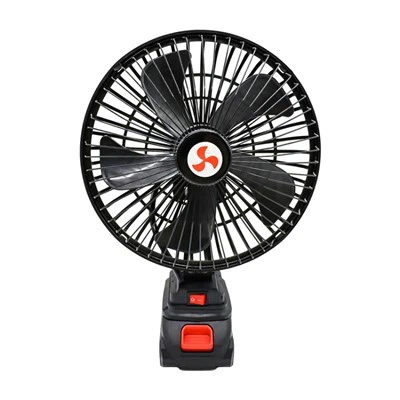
Lithium Battery Fan If you’re tired of display quality that lets you down, if you’re ready for a screen that actually delivers on its promise, don’t hesitate to reach out to start a conversation about what you need. We’re here to answer questions, share real-world test data, and make sure you get the right display for your space. No sales pitches, no fine print—just actual people who know displays and want to help you find what works.
References
- International Display Manufacturing Association. (2023). Global Standards for Commercial Display Performance and Durability.
- Consumer Technology Association. (2022). Viewing Angle and Color Accuracy Benchmark Tests for Commercial Displays.
- The Screen Media Research Institute. (2024). Long-Term Performance of Premium vs. Budget Commercial Displays.
- Independent Retail Technology Group. (2023). Brightness and Glare Resistance Requirements for Front-of-House Displays.
- Gamers and Creatives Tech Collective. (2024). Response Time and Refresh Rate Impacts on User Experience and Eye Strain.
Shandong Bayley Hardware Tools Co., Ltd.
As one of the most professional premium series manufacturers in China, we also support customized service. Please feel free to buy high quality premium series for sale here from our factory. Good service and punctual delivery are available.
Address: Room 807, Building A, Global Sunshine City, Hedong District, Linyi City, Shandong Province
E-mail: Sale2@sdbayley.com
WebSite: https://www.shandongbayley.com/
