Yo, what’s up! I’m a supplier of dental titanium material. You might be wondering, "What the heck is the Young’s modulus of dental titanium material?" Well, let’s dive right in and break it down in a way that’s easy to understand. Dental Titanium Material
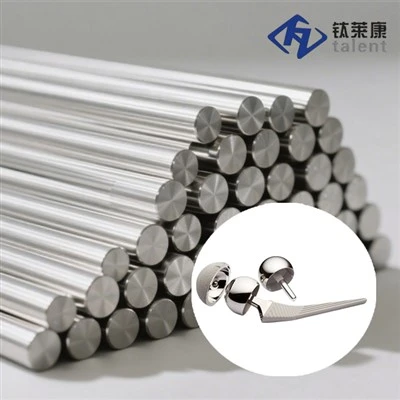
First off, Young’s modulus is a crucial concept in materials science. It’s like a measure of how stiff or flexible a material is. In simple terms, it tells you how much a material will stretch or compress when you apply a certain amount of force to it. It’s named after this British scientist, Thomas Young, who came up with the idea way back in the early 1800s. Pretty cool, right?
So, when it comes to dental titanium material, the Young’s modulus is a big deal. See, dental implants and other dental devices made from titanium need to be just the right amount of stiff. If they’re too stiff, they can cause stress on the surrounding bone. And if they’re too flexible, they won’t be strong enough to do their job properly.
The Young’s modulus of dental titanium material typically falls in the range of about 100 – 110 gigapascals (GPa). That might sound like a crazy number, but don’t worry. Let me explain why it’s important. When a dental implant is placed in the jawbone, it needs to be able to withstand the forces of chewing. These forces can be pretty intense, especially when you’re munching on something tough like a steak or an apple. So, having a high enough Young’s modulus means the implant can handle those forces without bending or breaking easily.
But it’s not just about strength. It’s also about compatibility with the human body. Titanium is great because it has a relatively low Young’s modulus compared to some other metals. This is beneficial because it’s closer to the Young’s modulus of bone. When the implant and the bone have similar stiffness, it helps to distribute the stress more evenly. That means less risk of the implant loosening over time or causing damage to the bone.
You might be thinking, "How do they measure the Young’s modulus of dental titanium material?" Well, there are a few ways. One common method is called a tensile test. In a tensile test, a sample of the titanium material is pulled in a controlled way until it breaks. During this process, the force applied and the resulting deformation of the sample are measured. From these measurements, the Young’s modulus can be calculated.
Another method is the nanoindentation technique. This is a more advanced way of measuring the mechanical properties of a material. With nanoindentation, a tiny tip is pressed into the surface of the titanium sample. The depth of the indentation and the force applied are measured, and from this data, the Young’s modulus can be determined.
Now, as a supplier of dental titanium material, I know how important it is to provide high – quality products. We make sure that our dental titanium has the right Young’s modulus. We use advanced manufacturing processes and strict quality control measures to ensure this. Our team of experts is constantly working to improve the properties of our titanium, making it even better for dental applications.
One of the advantages of the dental titanium material we supply is that it has excellent biocompatibility. This means that the body is less likely to reject the implant. And because of its proper Young’s modulus, it integrates well with the surrounding bone. This leads to better long – term results for patients.
Whether you’re a dentist looking for reliable dental implants or a dental device manufacturer, choosing the right dental titanium material is crucial. And understanding the Young’s modulus is a key part of that decision – making process.
If you’re in the market for dental titanium material, you’ve come to the right place. We’ve got a wide range of products that can meet your specific needs. Our materials are not only of high quality but also very affordable. We believe that good dental products should be accessible to everyone.
We’re always here to answer your questions. If you have any doubts about the Young’s modulus or any other properties of our dental titanium material, just give us a shout. We can provide you with detailed technical information and samples so you can test them out for yourself.
So, if you’re interested in working with us, don’t hesitate to reach out. Whether you need a small quantity for research purposes or a large order for production, we’re ready to serve you. Let’s start a conversation and see how we can work together to provide the best dental solutions.
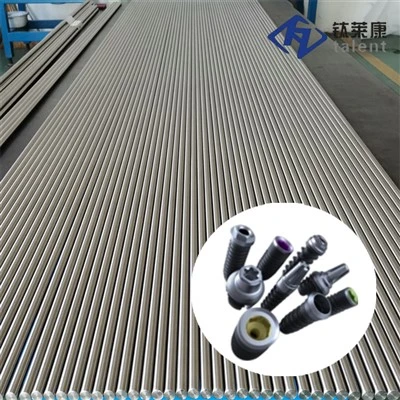
In conclusion, the Young’s modulus of dental titanium material is an important parameter that affects the performance and compatibility of dental implants and devices. By choosing our high – quality dental titanium, you can ensure better outcomes for your patients. So, what are you waiting for? Contact us today and let’s get started on making great dental products.
Dental Titanium Material References:
- "Materials Science and Engineering: An Introduction" by William D. Callister and David G. Rethwisch
- Research papers on dental implant materials from peer – reviewed journals in dentistry and materials science.
Baoji Tailaikang High-Tech Metal Materials Co., Ltd.
With abundant experience, we are one of the most professional dental titanium material manufacturers and suppliers in China. Please feel free to buy dental titanium material for sale here and get pricelist from our factory. For price consultation, contact us.
Address: No. 1, Southeast Cross of Gaoxin Avenue and Fenghuang 3rd Road, High-tech Development Zone, Baoji City, Shaanxi Province, China
E-mail: sale@tlkjs.com
WebSite: https://www.tlkmetal.com/
