If you’ve ever walked past a recycling yard or a manufacturing facility and spotted a team of workers loading bales of used plastic into a large, clunky machine, you’ve probably wondered: what happens next? That machine—our plastic crushing equipment, and the countless units like it across the industry—isn’t just a tool for breaking down tough plastic. It’s the first step in turning scrap water bottles, industrial packaging, agricultural film, and even shredded car bumpers into a uniform, usable raw material that can be remelted, reformed, and reused. One of the most common questions we get as a supplier of this equipment isn’t just “does it work?”—it’s “what size will the crushed plastic actually be when it comes out?” The answer isn’t a one-size-fits-all number, and as someone who’s spent 12 years working with plastic processors, recyclers, and manufacturers, I’m here to break that down in plain, practical terms, no jargon required. Plastic Crushing Equipment
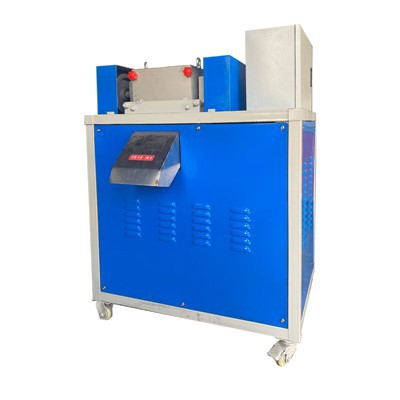
First, let’s get one thing straight: the output size of crushed plastic isn’t random. It’s a calculated decision, rooted in three key factors: what type of plastic you’re processing, what you plan to do with the crushed material afterward, and which plastic crushing equipment you choose to run. I’ve seen too many new operators buy a generic crusher, run a load of post-consumer plastic bottles, and end up with bits that are too big to feed into an extrusion line, or too small that they blow away in wind during transport. That’s why matching the machine to the desired end product is non-negotiable.
Let’s start with the basics of how plastic crushing works, because that’s where the size begins to take shape. A standard plastic crusher has a rotating rotor fitted with sharp, hardened steel blades, housed inside a sturdy metal chamber. When you feed plastic into the hopper at the top, it gets pulled toward the rotor, and the blades slice it against a fixed blade (called a breaker bar) mounted inside the chamber. But here’s the part most people don’t talk about: behind the blades, at the bottom of the chamber, is a metal screen with uniform round or oblong holes. That screen is the single biggest determinant of output size. The plastic has to pass through those holes to exit the crusher, so the hole diameter is exactly the maximum size of the crushed pieces—for round holes, anyway. For oblong holes, the output length is limited by the shorter dimension, while the width is slightly longer than the hole itself as the pieces stretch when exiting.
For example, a 5mm screen will produce crushed plastic bits that are roughly 5mm in diameter, give or take 0.5mm depending on the plastic’s thickness and how cleanly the blades cut. A 25mm screen will produce pieces around the size of a small marble, and a 100mm screen will give you chunks closer to the size of a golf ball. That’s the baseline, but there are variables that shift that number, which I’ll cover in a minute.
Now, let’s talk about common output sizes for different applications, because that’s what most operators really care about. I’ve grouped these by end use, since that’s how most people plan their crusher setup:
Post-consumer plastic bottle recycling is one of the largest sectors we work with here. Most beverage bottle recyclers need crushed PET (polyethylene terephthalate) flakes that are between 10mm and 15mm. Why? PET flakes this size are small enough to flow easily through conveyor belts, storage silos, and drying equipment, but large enough that they don’t generate excess fine dust. Fine dust is a problem because it can contaminate the melt during extrusion, leading to weak final products, and it’s also a safety hazard if it builds up in enclosed spaces. For this application, we typically recommend a crusher with a 12mm or 15mm screen. We’ve tested this setup with 2-liter soda bottles, milk jugs, and water bottles, and the output lands almost perfectly in that 10-15mm range—hardly any pieces smaller than 8mm or larger than 18mm, which is well within the tolerance for most recyclers’ specifications.
Next, industrial plastic scrap, like offcuts from pipe manufacturing, pallet trim, or thick industrial packaging. These are often made of HDPE (high-density polyethylene) or PP (polypropylene), which are thicker and tougher than PET. For these materials, most operations need output pieces between 20mm and 50mm. If you crush thick pipe, for example, you don’t want tiny pieces—they’re hard to handle and don’t mix well with other scrap. For this, we use a crusher with a larger screen, usually 25mm to 40mm, and sometimes we adjust the blade speed. Running the blades slower reduces the chance of over-cutting thick plastic into finer bits, so you end up with consistent chunks that are easy to feed into a regranulator (the next machine in the process) or a mixing line. I had a client last year who was crushing 8mm thick HDPE pipe offcuts; they initially used a 20mm screen and got too many fine pieces, so we swapped it for a 30mm screen and slowed the rotor speed by 10 RPM, and their flake size went straight to the 25-35mm range they needed.
Then there’s agricultural plastic, which is a whole different beast. Agricultural plastic—think silage wrap, greenhouse film, and crop covers—is often thin, flexible, and contaminated with dirt, seeds, and mud. For this, most processors need crushed pieces between 5mm and 10mm. Why? Smaller pieces mean more surface area, which makes it easier to clean the plastic later (via washing lines or air classification). If you leave large pieces of agricultural film, the mud and seeds get trapped in folds, and you have to spend extra time and money to remove them. For this application, we recommend a crusher with a smaller screen (8mm or 10mm) and often a secondary granulator to refine the size after the primary crush. We tested this with a client in Iowa last year who was processing 100 tons of silage wrap a month; they were getting pieces up to 50mm from their old crusher, and their washing line was getting clogged. After switching to our crusher with a 10mm screen and adding a secondary granulator, their flake size dropped to 5-12mm, and their washing line downtime fell by 30%.
Now, what are the variables that can shift that size, even with the same screen? First, plastic thickness and flexibility. Thin, flexible plastic like film will stretch as it’s forced through the screen holes, so it will come out slightly longer than the hole diameter—sometimes up to 2x the hole size. That’s why for film, we often use oblong holes instead of round ones: a 10x20mm oblong hole will produce pieces that are roughly 10mm wide and 20mm long, which is much more consistent than round holes would be for flexible material. Thick, rigid plastic like pipe or hard buckets won’t stretch, so they’ll come out almost exactly the screen diameter, no variation.
Blade condition is another big one. Sharp blades cut cleanly, producing uniform, well-sized pieces. Dull blades tear plastic instead of cutting it, leading to ragged edges and a mix of sizes—too many small pieces and too many oversized chunks. I can’t stress this enough: if your blades are more than 6 months old (or 2,000 hours of run time, whichever comes first), you’re not getting the output size you need. We offer blade replacement and sharpening services as part of our equipment packages, because we know that even the best crusher won’t perform well with dull blades.
Feeding speed also matters. If you overload the crusher with too much plastic at once, the blades can’t process it all, so pieces get stuck in the chamber and are cut multiple times, leading to smaller sizes than intended. Conversely, if you feed too slowly, the blades spin too fast, and large pieces can get pulled through the screen before they’re fully cut, leading to oversized chunks. Most modern crushers have automatic feed controls that adjust the speed based on load, which eliminates this variable. That’s one of the upgrades we include on our mid-range and high-end models, and it makes a huge difference in consistent output size.
Now, let’s talk about tolerance, because no crusher will produce 100% perfectly sized pieces. Even with the best setup, you’ll have a small percentage of pieces outside the target size, and that’s normal. For most applications, a tolerance of ±2mm is acceptable. For example, if your target is 15mm, you’ll have 10-20% of pieces that are 10mm or less, and 10-20% that are 20mm or more. If you need tighter tolerances—say, for a medical plastic application, where even a small oversized piece can ruin a batch—you’ll need a secondary screening step after crushing. That’s called a sizing screener, and it sorts the crushed plastic into different size grades: fine, medium, oversized. The oversized pieces go back into the crusher for another pass, so you end up with a consistent product that meets your exact specs.
I’ve spent enough time in plants to know that too many operators treat the crusher like a “set it and forget it” machine, but it’s actually a precision tool. A customer of mine in Ohio was processing post-consumer HDPE buckets, and they were getting too many oversized pieces that were clogging their regranulator. At first, they thought their crusher was broken, but when we checked, we found they were running a 30mm screen, but their blades were dull, and they were overloading the hopper by 20%. We sharpened the blades, adjusted the feed control, and they swapped to a 25mm screen, and their oversized pieces dropped from 15% to less than 2%. That’s the kind of difference small adjustments make.
If you’re still not sure what output size you need, or what setup will work for your plastic type, my advice is to start with your end product. What are you making with the crushed plastic? If it’s new plastic bottles, you’ll need 10-15mm PET flakes. If it’s plastic lumber, you’ll want 30-50mm HDPE chunks. If it’s injection-molded parts, you’ll need medium-sized flakes that flow well. Once you know that, the screen size and crusher type will fall into place.

At the end of the day, the output size of crushed plastic isn’t a random number—it’s a result of matching your machine, screen size, blade condition, and feed rate to your specific material and application. As a plastic crushing equipment supplier, our job isn’t just to sell you a machine—it’s to make sure you get the exact output you need, on spec, every time. If you’re outfitting a new recycling line, upgrading your existing crusher, or just troubleshooting inconsistent output size, don’t guess. Reach out to discuss your requirements in detail.
Plastic Drying Equipment References:
- Plastic Recycling Machinery Manufacturers Association. (2021). “Technical Guidelines for Size Reduction Equipment in Plastic Recycling.”
- American Society of Mechanical Engineers. (2019). “Performance Standards for Plastic Crushing and Granulating Equipment.”
- European Plastics Converters Association. (2022). “Best Practices for Consistent Crushed Plastic Size in Industrial Processing.”
Laizhou Yuening Machinery Co., Ltd.
As one of the most reliable plastic crushing equipment manufacturers in China, we warmly welcome you to buy cheap plastic crushing equipment made in China here from our factory. All customized machines are with high quality and low price. For pricelist, contact us now.
Address: Yuanjia Village, Luwang, Shahe Town, Laizhou City, Yantai City, Shandong Province
E-mail: yueningjixie@163.com
WebSite: https://www.ynplasticmachinery.com/
