If you’ve ever wandered through a craft store’s notion aisle, you’ve probably spotted twisted cords lying coiled in bins, or strung neatly on spools, in every hue under the sun. As someone who’s spent the last eight years running a small business supplying twisted cords to crafters of all skill levels—from weekend knitters to professional macramé artists—I’ve lost count of how many beginners stop by our booth at trade shows, or slide into our DMs, asking the same question: Are twisted cords actually a good pick for my first craft project? Twisted Cords
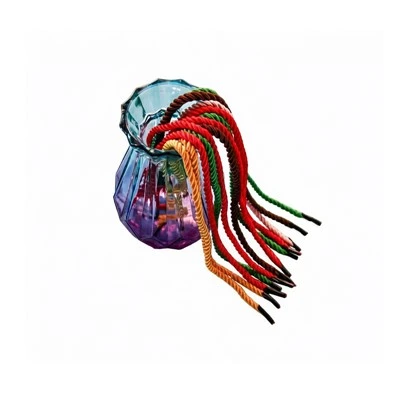
It’s a question that makes total sense. For someone who’s never picked up a thread or a cord before, the world of craft supplies can feel overwhelming. There’s cotton, polyester, hemp, jute, silk, all with their own terminology, weights, and uses. Twisted cords, in particular, have a reputation for feeling a bit “old-fashioned”—like something your grandma used for sewing repairs or tying gift boxes. But over the years, I’ve watched new crafters ditch their first choice of flimsy string for twisted cords, and end up building entire project repertoires around them. Today, I want to break down whether twisted cords are right for beginners, pull back the curtain on what makes them work (and what to watch out for when you’re starting out), and share why we’ve made them the core of our supply line for so many new makers.
First, let’s get clear on what a twisted cord actually is, because that’s where a lot of beginner confusion starts. A twisted cord is made by taking multiple individual fibers (or smaller strands of cord) and twisting them together in a consistent direction—usually clockwise, though sometimes counterclockwise depending on the type. That twist is what gives a twisted cord its structure, unlike a braided cord which interweaves strands over and under each other, or a roped cord which is a larger, even tighter twist of smaller cords. The most common twisted cords for crafts are cotton twisted cord, hemp twisted cord, and linen twisted cord—each with their own properties that matter a lot for beginners.
Now, let’s talk about the biggest win for beginners: how forgiving twisted cords are, especially compared to other craft supplies. When I say forgiving, I mean they don’t fray as easily as a loose single strand of yarn, and they don’t slide or shift mid-project the way a slippery silk cord might. Think about it: if you’re a beginner trying to make a simple macramé wall hanging, a common first project, you need something that stays where you put it. Twisted cords hold their shape when you tie knots, which is huge. I’ve had so many new customers come back and say they tried a cheap, un twisted cotton string for their first macramé, only to watch their knots slip and their project turn lopsided. Then they switched to our medium-weight twisted cotton, and suddenly their knots held, their lines were straight, and they finished that first wall hanging in an afternoon. That’s the kind of win that keeps people crafting.
Another point that’s often overlooked: twisted cords are incredibly versatile. A lot of beginners start with small projects to build confidence—keychains, bookmarks, small plant hangers, even friendship bracelets. Twisted cords work for all of these, and you can adjust the thickness (weight) to match your project, no fancy tools required. For example, a thin 1mm twisted cotton is perfect for delicate friendship bracelets, while a 5mm twisted hemp is sturdy enough for a small plant hanger. What I love most is that you don’t have to invest in a huge range of supplies upfront. A beginner can buy one spool of medium-weight twisted cord, a pair of scissors, and a tapestry needle, and make 3-4 different projects just by changing how they tie knots. That’s way less intimidating than buying five different types of cord for one project, which is what beginners often do when they’re starting out.
But wait—no craft supply is perfect for everyone, and twisted cords have a few quirks that beginners need to know about, so they don’t get frustrated. The biggest one is that twisted cords do have a “memory,” which means if you bend them too sharply or tie a knot too tight, they might leave a small crease. That’s not a permanent flaw, but it is something to be aware of when you’re working on a project where neatness matters, like a small keychain. The good news is that it’s easy to fix once your project is done: you can hang it up, mist it with a little water, and the crease will relax out in a day or two. Another quirk? Some cheap twisted cords on the market have inconsistent twists—meaning one part of the cord is tighter than another, so your knots might feel uneven. That’s why as a supplier, we test every batch of twisted cord we bring to our customers. We pull samples of every spool, check that the twist is uniform throughout, so beginners don’t waste time fighting a cord that’s misbehaving.
I’ve also heard beginners say, “Twisted cords look too basic. I want something that feels special for my first project.” To that, I’ll say that twisted cords are actually incredibly customizable, even in their basic form. They come in every color from matte white to neon pink, and you can dye them at home if you want a custom shade—something that’s way harder to do with braided cords, which have multiple layers that can take dye unevenly. We’ve had dozens of beginners use natural-colored twisted hemp and fabric dye to make one-of-a-kind keychains for their friends, and that’s the kind of project that feels personal, even if it’s made with a basic supply. For beginners, that’s a big plus: you can keep it simple, or you can add your own flair without needing special skills.
Let’s also talk about durability, which is a huge plus for beginners who are still learning. A twisted cord, when properly cared for, is way sturdier than a single strand of yarn or a thin ribbon. I’ve had customers send me photos of keychains they made with our twisted cotton two years ago, and they still look the same as the day they finished. The twist gives the cord extra tensile strength, so it doesn’t snap if you tug it a little too hard while tying a knot—something that’s bound to happen when you’re first learning. That durability means beginners don’t have to worry about ruining their project as they practice, which cuts down on frustration and makes the whole process more fun.
Now, let’s get real about a common misconception: that twisted cords are only for “rustic” projects, like macramé wall hangings or woven mats. That’s not true. Twisted cords work for so many beginner crafts beyond macramé. They’re perfect for embroidery floss replacements (if you want a thicker, sturdier stitch), for making jewelry—think beaded necklaces or bracelets where you want the thread to hold your beads in place—even for small sewing projects, like adding a decorative trim to a tote bag. I recently had a customer who was a total beginner tell me she used our 2mm twisted linen to make her first stuffed animal, using the cord as the stitching to close the back, and it worked way better than regular thread because it didn’t break as she sewed. That’s the kind of unexpected use that makes twisted cords so great for beginners: they’re not just for one type of craft.
Of course, there are a couple of tips I always give to new crafters who are working with twisted cords for the first time, to set them up for success. First, don’t cut more cord than you need at once. Because twisted cords have that memory, if you cut a piece that’s longer than what you actually need, it can twist and tangle as you work. It’s better to cut small pieces, tie your knots, and then cut more as you go. Second, if you’re working with a natural fiber twisted cord (like hemp or cotton), soak it in warm water for 10 minutes and let it dry completely before you start. That softens the cord, takes out the initial twist memory, and makes knots even easier to tie. Third, if you’re a total beginner, start with a medium-weight twisted cord—something between 2mm and 5mm. Thin cords are too easy to break when you’re first learning, and thick cords can be hard to handle for small projects. We label all our spools with the weight and recommended uses, so beginners can pick the right one without guessing.
As someone who’s been in this industry for years, I’ve seen so many beginners give up on crafting because they picked a supply that was too hard to work with. A cheap, flimsy cord that slips and frays, a yarn that splits when you try to knit a stitch, a ribbon that’s too stiff to tie neat bows. That’s why twisted cords, when you pick the right quality, remove a lot of those beginner hurdles. They’re forgiving, versatile, durable, and affordable—all things that matter when you’re just starting out and don’t want to spend a lot of money on supplies you might not use again.
If you’re a beginner who’s been on the fence about twisted cords, let me leave you with this: go for it. Start small. Buy one spool of medium-weight twisted cord, a pair of sharp scissors, and maybe a keychain ring if you want to make a simple project. You don’t need fancy tools or a big budget to get started. And if you’re not sure which type is right for your first project, reach out. We work with crafters of all skill levels, and we’re happy to help you pick the right twisted cord for what you want to make. Whether you want a thin cord for friendship bracelets or a sturdier one for a small plant hanger, we’ve got you covered.
Crafting should be fun, and the last thing anyone wants is to get frustrated because their supplies aren’t working with them. Twisted cords are designed to make crafting easier for everyone, especially beginners, and that’s something I’ve believed in since we first started supplying them. So next time you’re at a craft store, or browsing online for supplies, give twisted cords a try. I think you’ll be surprised at how much you can make with them, and how much easier they make the whole process.
If you’re interested in stocking high-quality twisted cords for your own craft projects, or picking up supplies for your next creation, feel free to connect with us for more information and ordering details. We’re here to help with all your twisted cord needs, for beginners and experienced crafters alike.
3 Strand Rope References:
- The Textile Institute. (2019). Handbook of Textile Structures and Their Properties. Woodhead Publishing.
- Macramé for Beginners: A Guide to Essential Knots and Projects. Craft Supply Association of America, 2021.
- Natural Fiber Cords: Performance and Application in Crafts. Journal of Fiber Arts and Crafting, vol. 12, no. 3, 2020, pp. 45-52.
- Beginner Craft Supply Best Practices: Reducing Frustration and Increasing Engagement. Small Craft Business Quarterly, vol. 8, no. 2, 2022, pp. 18-22.
Tengzhou Fujin Plastic Products Co., Ltd.
As one of the most professional twisted cords manufacturers and suppliers in China, we also support customized service. With abundant experience, we warmly welcome you to buy bulk twisted cords made in China here and get pricelist from our factory. For price consultation, contact us.
Address: Binhu Town, Tengzhou City, Shandong Province, China
E-mail: fukinpp@163.com
WebSite: https://www.tzfujin.com/
