In the realm of modern communication, satellite communication stands as a cornerstone, enabling global connectivity, seamless data transfer, and reliable broadcasting services. At the heart of this sophisticated system lies a critical aspect: time and frequency synchronization. As a dedicated Time and Frequency Synchronization supplier, I’ve witnessed firsthand the pivotal role these processes play in ensuring the efficiency and reliability of satellite communication networks. In this blog, we’ll delve into the intricate workings of time and frequency synchronization in satellite communication, exploring the underlying principles, challenges, and the solutions we offer to overcome them. Time and Frequency Synchronization
The Fundamentals of Time and Frequency in Satellite Communication
Before we dive into the synchronization mechanisms, it’s essential to understand the significance of time and frequency in satellite communication. Time synchronization ensures that all devices within a satellite network operate on the same time scale, allowing for precise coordination of data transmission and reception. This is crucial for applications such as global positioning systems (GPS), where accurate timekeeping is essential for determining location.
Frequency synchronization, on the other hand, ensures that all transmitters and receivers in the network are operating at the same frequency. This is necessary to prevent interference between different signals and to ensure that data can be transmitted and received accurately. In satellite communication, where multiple satellites and ground stations are involved, maintaining precise frequency synchronization is particularly challenging due to factors such as Doppler shift and signal propagation delays.
How Time Synchronization Works in Satellite Communication
Time synchronization in satellite communication is typically achieved through the use of atomic clocks, which are extremely accurate timekeeping devices. These clocks are often installed on board satellites and ground stations to provide a stable and precise time reference.
One of the most widely used methods for time synchronization in satellite communication is the Global Positioning System (GPS). GPS satellites are equipped with atomic clocks that transmit highly accurate time signals to ground receivers. By receiving signals from multiple GPS satellites, a ground receiver can calculate its own position and time with high precision. This process, known as trilateration, relies on the fact that the time it takes for a signal to travel from a satellite to a receiver is directly proportional to the distance between them.
In addition to GPS, other satellite-based time synchronization systems, such as GLONASS, Galileo, and BeiDou, also play important roles in global timekeeping. These systems operate on similar principles to GPS, providing users with accurate time information that can be used for a variety of applications, including satellite communication.
Another approach to time synchronization in satellite communication is the use of two-way satellite time and frequency transfer (TWSTFT). This method involves the exchange of time signals between two ground stations via a satellite link. By measuring the round-trip time of the signals, the two stations can determine the time difference between their clocks and adjust them accordingly. TWSTFT is particularly useful for achieving high-precision time synchronization over long distances, as it can compensate for signal propagation delays and other sources of error.
How Frequency Synchronization Works in Satellite Communication
Frequency synchronization in satellite communication is essential for ensuring the proper operation of communication systems. It involves aligning the frequencies of transmitters and receivers to a common reference frequency, thereby enabling accurate signal transmission and reception.
One of the primary challenges in frequency synchronization is the Doppler effect. As a satellite moves relative to a ground station, the frequency of the signals it transmits appears to change due to the relative motion between the two. This can cause significant problems in communication systems, as it can lead to signal distortion and interference.
To compensate for the Doppler effect, satellite communication systems typically use frequency tracking and compensation techniques. These techniques involve continuously monitoring the frequency of the received signals and adjusting the frequency of the transmitters and receivers accordingly. This can be achieved using a variety of methods, including phase-locked loops (PLLs), frequency-locked loops (FLLs), and digital signal processing (DSP) algorithms.
Another important aspect of frequency synchronization in satellite communication is the management of the satellite’s onboard oscillators. These oscillators are responsible for generating the carrier frequencies used for signal transmission and reception. To ensure the stability and accuracy of these frequencies, satellite operators typically use high-quality oscillators, such as atomic oscillators or crystal oscillators, and implement rigorous calibration and monitoring procedures.
Challenges in Time and Frequency Synchronization
Despite the availability of advanced technologies and techniques, time and frequency synchronization in satellite communication still faces several challenges. One of the main challenges is the harsh space environment, which can have a significant impact on the performance of atomic clocks and other timekeeping devices. Radiation, temperature variations, and mechanical vibrations can all cause errors in clock operation, leading to time and frequency inaccuracies.
Another challenge is the increasing complexity of satellite communication networks. As the number of satellites and ground stations in the network grows, the task of maintaining precise time and frequency synchronization becomes more difficult. This is particularly true for networks that involve multiple satellite constellations and different types of communication systems.
In addition, the security of time and frequency synchronization is also a growing concern. As satellite communication systems become more critical to national security and economic infrastructure, they are increasingly targeted by malicious actors. Attacks on time and frequency synchronization systems can disrupt communication services, cause navigation errors, and even lead to physical damage to infrastructure.
Solutions Offered by Our Company
As a leading Time and Frequency Synchronization supplier, we understand the challenges faced by satellite communication operators and are committed to providing innovative solutions to address them. Our products and services are designed to ensure the highest levels of accuracy, reliability, and security in time and frequency synchronization.
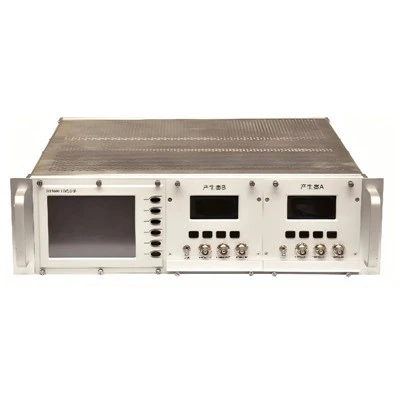
One of our key products is our range of high-precision atomic clocks. These clocks offer exceptional stability and accuracy, making them ideal for use in satellite communication systems. Our atomic clocks are designed to withstand the harsh space environment, with features such as radiation shielding, temperature compensation, and vibration isolation.
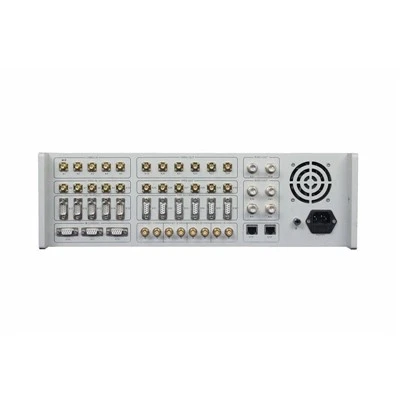
In addition to atomic clocks, we also offer a variety of frequency synthesisers and distribution systems. These products are designed to generate and distribute precise frequency signals to multiple devices within a satellite network, ensuring that all transmitters and receivers are operating at the same frequency. Our frequency synthesisers and distribution systems are highly configurable and can be tailored to meet the specific requirements of each customer.
We also provide comprehensive time and frequency synchronization solutions that integrate our products with existing satellite communication systems. Our solutions include software-based algorithms for time and frequency tracking, compensation, and calibration, as well as hardware-based devices for signal processing and distribution. Our team of experienced engineers can work closely with customers to design and implement customized solutions that meet their specific needs.
Conclusion
Time and frequency synchronization are essential for the proper operation of satellite communication systems. By ensuring that all devices within a network are operating on the same time scale and at the same frequency, these processes enable accurate data transmission, reliable communication, and precise navigation. However, achieving and maintaining time and frequency synchronization in satellite communication is a complex and challenging task, requiring the use of advanced technologies and techniques.
As a Time and Frequency Synchronization supplier, we are dedicated to providing our customers with the highest quality products and services to meet their synchronization needs. Our innovative solutions are designed to overcome the challenges of the harsh space environment, the increasing complexity of satellite communication networks, and the growing threat of security attacks.
Time Sever If you are involved in satellite communication and are looking for reliable time and frequency synchronization solutions, we invite you to contact us to discuss your specific requirements. Our team of experts will be happy to assist you in finding the best solution for your needs.
References
- IEEE Transactions on Aerospace and Electronic Systems
- Journal of Navigation
- Proceedings of the IEEE International Frequency Control Symposium
- GPS World magazine
- Satellite Communications Handbook by Andrew J. Woods
China Go-Sat Microwave Co., Ltd.
China Go-Sat Microwave Co., Ltd. is one of the most professional time and frequency synchronization manufacturers and suppliers in China. With abundant experience, we warmly welcome you to buy advanced time and frequency synchronization made in China here and get quotation from our factory. All customized products are with high quality and competitive price.
Address: No. 3908 ShiBo Avenue, Baqiao District, Xi’an, China
E-mail: sales@go-satcom.com
WebSite: https://www.go-satcom.com/
