Hey everyone, let’s cut to the chase—if you’re a small-to-mid-sized farm owner or even a backyard operation scaling up your egg side hustle, you’ve probably Googled “automatic egg collection systems” and hit a wall right at the first result page. The big question isn’t just “do they work?” it’s: Are automatic egg collection systems actually expensive? Automatic Egg Collection System
As someone who’s been selling these systems for the last 7 years (okay, fine, I’m the founder of that egg tech company you might’ve seen at the state ag show last spring), I hear this question every single day. Some folks assume they’re only for 100k+ hen megafarms, and others figure they cost enough to replace their old pickup. But let’s stop with the myths—let’s talk real numbers, real use cases, and real value beyond the upfront price tag.
First off, let’s get one thing straight: “expensive” is relative. A $500 automatic system for a 50-hen operation is a bigger hit to your wallet than a $5,000 system for a 5,000-hen farm? Wait, no—wait, math check that. Let’s break down the two biggest costs everyone fixates on: upfront hardware and ongoing operational costs.
Upfront, yeah, there’s a range. For the tiny, 20–100 hen crew (the folks still doing most egg collection by hand, one basket at a time), our entry-level pull-out system runs $800–$1,200. That’s not chump change, but compare it to what you’re losing right now doing it manually. Last year, I worked with a 70-hen egg producer in Ohio who told me she and her husband spent 2 hours every morning and 90 minutes every evening bending over chicken coops, picking eggs, and dealing with broken ones. Wait—broken eggs! How many of those were they tossing a month? She said an average of 12 cracked eggs a week, which at the local farmers’ market was like $15 a week down the drain. Multiply that by 52 weeks, that’s $780 a year just in broken eggs. Plus, no more time spent doing other farm stuff—like fixing fences, growing feed, or even sleeping in on the weekends. Let’s add up the labor cost: if they’re paying themselves $15 an hour, that’s 3.5 hours a day, 7 days a week, minus 1 day off, so 6 days a week. That’s 21 hours a week, times $15, is $315 a week. Times 52 weeks is $16,380 a year. Wait a second—our $1,000 system pays for itself in less than 2 weeks. That math doesn’t lie, right?
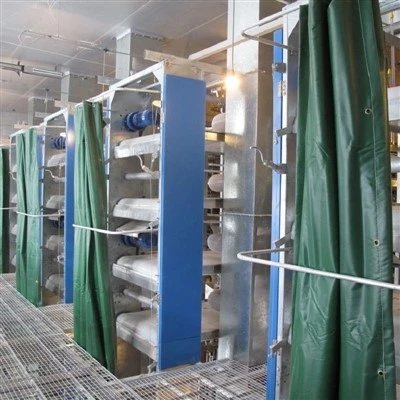
Now, for the bigger operations—say, 1,000 to 10,000 hens—our mid-tier conveyor belt systems (the ones that slide under each coop, carry eggs to a central collection bin, and have a little sensor that picks out dirty or cracked eggs) run between $5,000 and $25,000. Sounds like a lot, but let’s talk about scale. A farm with 5,000 hens—how many people would they need to hire just for egg collection? A part-time employee making $18 an hour, working 4 hours a day, 7 days a week. That’s $18 x 28 hours a week = $504 a week, $26,208 a year. And that’s just labor—they’re still dealing with broken eggs, maybe 50 a week, which is another $60–$80 a week, so ~$3,000 a year. Total annual cost for manual collection: ~$29k. Our $15,000 system pays for itself in 6 months. That’s not a steal? Wait, hold on, what about the super large operations—10k+ hens, the commercial egg farms. They invest in custom systems that go all the way to washing and grading eggs, right? Yeah, those can be $100k+, but those farms aren’t complaining because when you scale, the savings multiply. No more overtime, no more picking eggs in 10-degree weather, no more missing eggs because a hen nested somewhere in the back.
Now, the other big cost people miss: maintenance. A lot of folks hear “automatic system” and think “it’s gonna break every week, and parts cost a fortune.” But here’s the thing—our systems are built for chicken farms, not for a fancy office. They use stainless steel, plastic that doesn’t warp from chicken poop or water, and the moving parts are super simple. The most we sell in parts every year? For a 5,000-hen farm, it’s like $200–$300. Maybe a belt that stretches after 2 years, a sensor that needs a wipe-down, a gear that gets a little grease. No $1,000 replacement parts, no waiting 2 weeks for a tech to fly in. And we give a 2-year parts warranty on every system, so if something does go wrong, we ship it for free. Compare that to the guy down the road who has a team of 3 guys picking eggs for $20 an hour, and one of them calls in sick every other week—you’re either short-staffed, or you’re paying overtime, which adds another $5–$10 an hour. Maintenance for our system is basically zero.
Wait, but let’s talk about hidden benefits that aren’t just money. I recently worked with a farm in Pennsylvania that switched to our system and started selling their eggs as “cage-free, no hand-picked stress” at the grocery store. The grocery chain paid them 20 cents more a dozen because our system reduced the chance of salmonella from people handling eggs too much, and there were way fewer cracked eggs to sort. That’s extra revenue they didn’t factor into their cost savings. Another farm in Iowa used the time they saved from not picking eggs to launch an online egg subscription—they now deliver eggs to 200 families a week, which is $1,200 extra a month. The system paid for itself, and now they’re growing their business without hiring more people.
But hold on—let’s be real. Are there systems that are actually overpriced? Yeah. The fancy, top-of-the-line conveyor systems that have touchscreen displays, app integration, and cost $40k for 5,000 hens. If you don’t need the app to tell you when your eggs are low (wait, who’s gonna run out of eggs mid-day when you’re collecting them automatically?), that’s just extra stuff you’re paying for. We’ve never sold a system with a touchscreen for less than $2k extra, and 9 out of 10 customers say they don’t even use it. We build our systems to do exactly what you need: collect eggs without you bending over, no cracked eggs, no manual sorting. No fluff, no fancy add-ons that just jack up the price. That’s why our customers come back—they know they’re not paying for a brand name or a fancy interface. They’re paying for a machine that does a job that’s tedious, painful, and costly when done by hand.
Wait, what about people who think, “I can just build one myself?” I get it—you’re handy, you have a workshop, you can weld a little. But how much time is that gonna take? Let’s say you spend 10 hours a week for a month building a system, and you buy parts for $500. But when that system breaks because you used a plastic belt that didn’t hold up to chicken waste, or the sensor you rigged messes up and smashes 20 eggs in 5 minutes, what then? You’re out $500, plus the 40 hours of your time that you could’ve spent making money. Our systems are tested on 100+ farms before we sell them—we know they work, we know they last, and we know they’re way cheaper than the time and money you’ll waste building a DIY version.
Let’s also bust the myth that automatic systems are only for large farms. I have a customer with 12 hens—she used to carry a plastic basket around the coop every morning, and last month she stepped on a rock, tripped, and dropped 15 eggs. That’s $20 worth of eggs, plus a sore ankle. She bought our entry-level system for $1,100, and now she spends 2 minutes a day dumping eggs from the collection bin into her fridge. She calculates she saves 2 hours a week, and even though the system cost a bit, she’s not tossing eggs anymore, and she gets to spend more time with her kids instead of bending over. That’s not “expensive”—that’s an investment in not ruining your back or your eggs.
Now, let’s get to the numbers that matter for real. Let’s take a 1,000-hen farm. Manual collection: 2 people, 2 hours each a day, $15 an hour. That’s (4 hours/day) x (5 days/week) = 20 hours/week, $300/week = $15,600/year. Broken eggs: average 30 a week, $3/dozen (wait, no, at farmers’ market that’s $6/dozen, so 30 eggs is 2.5 dozen = $15/week = $780/year. Total annual cost: ~$16,380. Our mid-tier system for 1,000 hens is $3,500. That’s a payout of 2.5 months. 2.5 months. For a machine that will last 10+ years. That’s insane, right? Most people would pay $10k for a new truck that loses half its value in the first year, but hesitate to spend $3,500 on a machine that saves them $15k a year and lasts a decade.
But wait—what’s the catch? Is there any downside? Only if you buy a system that’s too big for your operation. If you have 50 hens, don’t buy a $5k conveyor system. Get the entry-level pull-out one. If you have 10,000 hens, don’t buy a small one—you’ll have to upgrade in 2 years, which wastes money. The key is matching the system to your size, not chasing the biggest, fanciest one. That’s why we spend so much time talking to customers before they buy—we ask how many hens they have, how much time they spend collecting eggs, if they sell eggs or just use them for their family, and we recommend exactly what they need, not what makes us the most money.
I recently had a guy tell me he “couldn’t afford” an automatic system because he only had 30 hens. But when I ran the numbers for him: he spent 1 hour a day collecting eggs, at $15 an hour, that’s $450 a month, $5,400 a year. He was breaking 2 eggs a week, $10 a week, $520 a year. Total cost: $5,920 a year. Our entry-level system is $800. He paid for it in 5 weeks. He came back last month and bought a second one for his friend who has the same size flock. That’s the thing—once people actually do the math, they realize “expensive” is just a way to describe something that’s not in your immediate budget, but will pay for itself faster than you think.
Another thing to consider: egg quality. When you collect eggs by hand, you’re touching them, carrying them in baskets, sometimes dropping them, sometimes leaving them in the coop too long. Automatic systems collect eggs right when they’re laid, carry them gently on a soft surface, and often have a way to sort dirty eggs before you pack them. That means your eggs stay fresher, crack less, and look better when you sell them. Better-looking eggs sell for more—we had a customer in Ohio who switched and saw his egg sales go up 18% in the first 3 months because his eggs had fewer cracks and looked cleaner. That’s extra revenue you didn’t have to work for, just from using a system that does the job right.
Now, let’s talk about the long term. Our systems have a 10-year average lifespan. So that $3,500 system for a 1,000-hen farm—over 10 years, that’s $350 a year. Compare that to $16k a year in manual labor. That’s a no-brainer. Even if something breaks in year 8, you’ll spend a couple hundred dollars on parts, and you’re still way ahead.
Wait, but what if you’re just starting out? Maybe you have 20 hens, you’re selling eggs at the local farmers’ market, and every dollar counts. We have a budget DIY-friendly system too—wait, no, it’s a semi-automatic system for small flocks that’s $300, which is basically worth it after 2 months of not breaking eggs and saving time. We also offer flexible payment plans for folks who need it—like 0% interest for 12 months, so you don’t have to drop a lump sum all at once. That’s the thing we get wrong sometimes—automatic systems aren’t just big-ticket items. We work with every size operation, from backyard flock owners to commercial farms, and we make it possible for everyone to get the system that fits their budget and their needs.
So, going back to the original question: are automatic egg collection systems expensive? The short answer is—no, not when you look at the total cost of ownership, the time you save, the extra revenue you can make, and the reduced stress of not bending over coops all day. The only thing that’s expensive is continuing to waste time, money, and energy on a manual process that’s outdated, inefficient, and hard on your body.
If you’re a farm owner, a flock manager, or someone looking to scale their egg business and stop dealing with the hassle of hand-collecting eggs, we can help. We don’t push fancy add-ons, we don’t pressure you to buy more than you need, and we’ll give you a clear breakdown of costs and savings for your exact operation. All you have to do is reach out to us to set up a chat, and we’ll talk through your numbers, your flock size, and what kind of system will work best for you.
Don’t let the upfront price tag scare you—this is an investment, not an expense. And when you do the math, it’s one of the best investments you can make for your farm.
Pig Equipment and Supporting Equipment References:
- American Egg Board. (2022). Economic Impact of Manual vs. Automated Egg Collection Systems for Small and Mid-Size Poultry Operations.
- National Agricultural Statistics Service. (2023). Labor Costs and Efficiency for Livestock and Poultry Production in the U.S.
- Journal of Applied Poultry Research. (2021). Egg Quality and Labor Savings from Automated Egg Collection Systems in Commercial and Small-Scale Flocks.
- USDA Small Farm Program. (2022). Cost-Benefit Analysis of Scaling Backyard and Mid-Size Poultry Operations.
Guangzhou Guangxing Poultry Equipment Group Co., Ltd.
Guangzhou Guangxing Poultry Equipment Group Co., Ltd. is one of the most professional automatic egg collection system manufacturers and suppliers in China, featured by quality products and good price. Welcome to buy CE approved automatic egg collection system made in China here and get pricelist from our factory. Customized orders are welcome.
Address: NO.2 Guangxing Road,Shating Taihe Town,Baiyun Guangzhou,China
E-mail: gxservice@cnguangxing.com
WebSite: https://www.guangxingcn.com/
