Hey there, let’s cut through the noise if you’re hunting for a dewatering centrifuge and wondering how much you’ll actually drop on one— I’m the guy running the dewatering centrifuge supply side, and I get it: price questions feel like pulling teeth sometimes, especially when everyone’s throwing random numbers around. No fancy jargon, no AI-sounding fluff, just the real breakdown I’ve seen over the years working with workshops, wastewater plants, food processing teams, and even small aggregate ops that need these bad boys. Dewatering Centrifuge
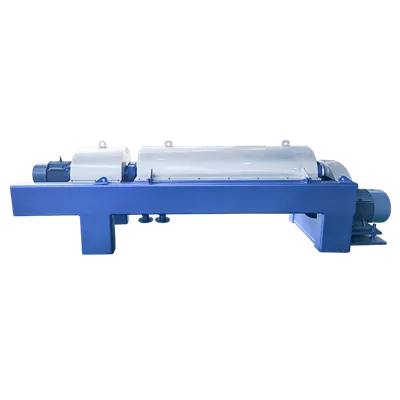
First off, let’s ground this: dewatering centrifuges aren’t one-size-fits-all, right? That’s the biggest mistake I see buyers make—they Google “dewatering centrifuge price” and expect a single number, like how much a gallon of milk costs. Nah, these machines are built for specific jobs. I’ve had a customer come in last month asking for a cheap unit to dry wood chips for a small backyard biomass setup, and another client needed a heavy-duty unit that’d handle 20,000 gallons of industrial sludge an hour for a city treatment plant—total different leagues.
Let’s start with the low end, the entry-level stuff. That’s usually for small, light-duty jobs: maybe a food truck looking to dewater spent grain or pulp, or a small farm handling manure slurry for compost, or a hobbyist-scale aggregate operation doing small batches of sand. These are often compact, skid-mounted models, not custom-built, max output is like 5 to 20 gallons per minute. What’s the price here? I see entry-level units ranging from, wait, let’s be real—if you’re buying new, not used and rusted, it’s between $3,500 and $12,000. Yeah, that’s a wide gap, but it comes down to build quality: some entry-level ones use basic stainless steel for the bowl (more rust-resistant than cheap steel) and have simpler controls, others are straight mild steel with a manual feed. We once had a customer who tried to cut corners with a $2,800 entry-level unit from a no-name brand online, and it died in 3 months—had to come to us for a replacement, so I always say: if it’s too good to be true, it’s probably gonna cost you more down the line.
Next, the mid-range, workhorse category. This is where most of our sales come from—customers that aren’t messing around, have steady, consistent volume, need something that runs 8 to 12 hours a day, not just occasional batches. These are skid-mounted or semi-custom, with output from 20 to 100 gallons per minute, can handle thicker, more abrasive slurries (like municipal sludge, food processing byproducts that are more gunked up, or construction aggregate with more rock fines). Build quality here goes up: full stainless steel bowls, variable speed controls, automatic feed/discharge, maybe a small PLC (programmable logic controller) so operators don’t have to babysit it. What’s the price here? We’re talking $12,000 up to $55,000. The split in this range is usually output and durability: a unit doing 25 gpm for a local brewery dewatering yeast is gonna be on the lower end of mid-range ($12k-$20k), while a unit doing 80 gpm for a mid-sized wastewater treatment plant is gonna hit $40k-$55k. We also offer custom tweaks here—like adding a lid for fume control for food-grade jobs, or extra wear plates for abrasive slurries, and that can nudge the price up a little, but we only do that if the customer actually needs it, no upselling nonsense.
Then the big leagues: heavy-duty industrial units. These are for large-scale operations, 24/7 run times, massive volumes—think municipal wastewater plants, mining operations dewatering tailings, food processing giants like big meatpacking plants handling blood and offal, or chemical plants dealing with harsh, corrosive materials. Output here starts at 100 gallons per minute and can go way higher, even into thousands of gallons an hour. These aren’t off-the-shelf; they’re built to order almost, with heavy-duty alloy bowls (some even titanium for super corrosive stuff), advanced PLCs with remote monitoring, automatic cleaning systems, safety interlocks that meet OSHA (or whatever local regulatory body) standards, and can handle extreme loads. What’s the price here? It’s not even a single range, more like a spectrum, but start at $55,000 and go all the way up to $250,000 or more. Last year we built a custom unit for a mining company in the West that handles abrasive silica tailings, and the final price was around $220k. The big factors here are: how much material you’re processing, how abrasive/corrosive that material is, whether you need compliance with strict environmental or safety rules, and any specialized features (like integrating with your existing plant control system). I always tell folks: if you’re in this tier, you’re not buying a centrifuge, you’re buying a piece of your entire operation, so skimping on price here is a terrible call.
Wait, but what about used units? I get asked about used all the time, especially by small businesses trying to keep costs down. Used dewatering centrifuges can range from $1,500 (for a super old, beat-up entry-level unit from the 90s that needs a full rebuild) up to $70,000 for a barely used mid-range unit that was only run for a year or two at another plant. But my warning here is huge: a lot of used units have hidden issues. I’ve seen guys buy a used mid-range unit for $8k, only to find out the bowl is cracked and needs $10k in repairs—so they end up paying more than if they’d just bought new. If you’re going used, make sure you get a full inspection by a trusted mechanic, ask for maintenance records, and know exactly what you’re getting (no hidden dents, no worn bearings, no corrosion that’ll cause downtime in 6 months). We actually sell certified pre-owned units too—they’re inspected, repaired, have a 30-day warranty, and usually cost 40-50% less than new, which is a good middle ground for folks on a budget but don’t want to roll the dice on a random used unit.
Now, what else affects the price that most buyers don’t think about? Let’s break that down, because it’s not just the machine itself. First, installation and setup. A small entry-level unit might be easy to hook up—just plug in power, connect a hose, maybe $500-$1,000 for installation. But a heavy-duty industrial unit? You might need a concrete pad, upgraded electrical service, plumbing for feed and discharge, maybe a permit for a new piece of equipment, so installation can be $5,000 up to $30,000 or more. Second, parts and service contracts. A lot of suppliers will offer a 1-year parts warranty for new units, but if you want an extended warranty, that can add 10-15% of the machine price per year. Also, wear parts—like bowl liners, seals, belts—those need replacing every 1-3 years depending on use, and if you go with a no-name brand, those parts might be hard to find and expensive, but with a reputable supplier like us, we stock common parts so you don’t have to wait weeks. Third, compliance. If you’re in an industry that has strict rules—like food and beverage (FDA compliance) or environmental (EPA rules for wastewater discharge), that can add 5-10% to the price, because we have to build the unit to meet those exact standards, not just a generic spec. Fourth, shipping. A small entry-level unit might be shipped for free or $500, but a heavy-duty industrial unit can weigh 10,000+ pounds, so shipping cross-country is easily $3,000-$8,000.
Wait, let’s also bust a common myth: more expensive doesn’t always mean better. I’ve seen mid-range units that cost $30k outperform some $50k industrial units because the $50k one was built for a different material, not for the job the customer was using it for. It’s all about matching the machine to your specific needs. If you have a small brewery dewatering spent grain, you don’t need a 100 gpm industrial unit—you’re wasting money on features you’ll never use. If you’re a mining company, skimping on the corrosion-resistant bowl is just asking for a breakdown mid-shift, which costs you way more in lost production than the extra $20k for the right unit.
Let me throw in a real example from last quarter to make this concrete. A local craft brewery hit us up, saying they had a 10-barrel system, spent 10 hours a day producing spent grain that was going to a landfill, costing them $300 a week in disposal fees. They thought they needed a $50k industrial unit, but after chatting, we recommended a mid-range 25 gpm unit that cost $18k, plus $1,500 for installation and $500 in parts. They now dry the grain down to 15% moisture (from 70% before) and sell it to a local farm for animal feed, making back their entire investment in 8 months. That’s the sweet spot—getting the right price for the right machine, not overpaying for capacity you don’t need. Another example: a small construction aggregate company tried a $2,500 entry-level unit from a foreign supplier, but it broke every time they ran it with sand and gravel (abrasive), ended up buying a $14k mid-range unit from us, and now it runs 12 hours a day with no issues, saving them thousands in downtime.
So if you’re still scratching your head about price, here’s the quick cheat sheet to figure out your ballpark: 1) What are you dewatering? Light (spent grain, manure) or heavy/abrasive (sludge, sand, tailings)? 2) How much volume do you process per hour/day? Occasional batches or 8+ hours a day? 3) Do you need compliance rules (FDA, EPA) or advanced features? That’ll narrow it down to entry, mid, or heavy range.
At the end of the day, I’ve been supplying dewatering centrifuges for 12 years, and the biggest mistake I see buyers make is fixating on the upfront price instead of the total cost of ownership. A $3,500 entry-level unit might seem cheap, but if it breaks every 3 months, you’re looking at $14k a year in repairs alone, plus lost production, which is way more than buying a $10k unit that runs for 5 years.
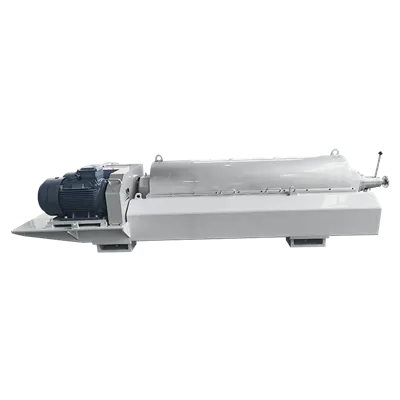
If you’re ready to stop guessing and get a real, tailored price for your exact needs—no generic quotes, no fine print, no sales guys pushing you into something you don’t need—hit me up. We can chat through your operation, what you’re dewatering, how much volume you’re dealing with, and get you a transparent quote that includes everything: machine, installation, parts, warranty, whatever you need. No pressure, just straight answers.
Decanter Centrifuge References:
- Dewatering Centrifuge Selection Guide, Process Equipment Association, 2023.
- Industrial Sludge Dewatering Cost Analysis, Environmental Protection Agency, 2022.
- Centrifuge Total Cost of Ownership Report, Manufacturing Technology Association, 2023.
- Food & Beverage Processing Equipment Compliance Standards, FDA, 2022.
Lishui Yuanrong Environmental Protection Equipment Co., Ltd.
As one of the most professional dewatering centrifuge manufacturers and suppliers in China, we have world-leading production equipment and strong manufacturing capabilities. Please feel free to buy customized dewatering centrifuge from our factory. Also, quotation is available.
Address: Lot 6-1, Block 15, Wanyang Zongchuang City, Lishui, Zhejiang, China
E-mail: 361184920@qq.com
WebSite: https://www.yrhdc.com/
