If you’ve ever stepped foot on a manufacturing floor during a welding job—especially one being done by hand—you know that noise isn’t just an annoyance. It’s a physical sensation: the kind that makes your ears ring for hours afterward, that forces you to reach for ear protection before you even see the sparks, that can cause long-term hearing damage if you’re exposed to it regularly. Now, if you’re like many business owners, safety managers, or operations leads I talk to, you’ve probably asked the same question as everyone who’s considering upgrading to flexible robotic welding systems: “What’s the noise level, really?” Flexible Robotic Welding Systems
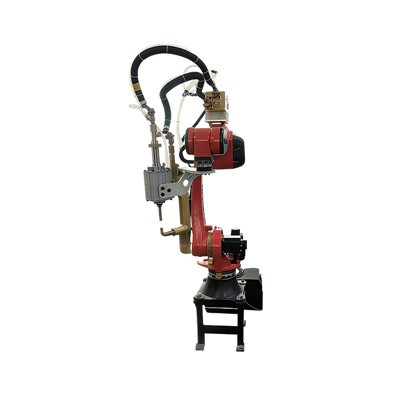
I’m in the business of selling these systems, and I get it. When you’re investing in equipment that will run 8, 10, even 12 hours a day, six days a week, you don’t just care about weld quality or speed. You care about your team. You care about compliance with OSHA, ISO, and whatever local workplace safety standards you have to follow. You care about keeping turnover low, because one of the biggest hidden costs of manufacturing isn’t parts or energy—it’s replacing workers who can’t handle the noise. So let’s cut through the sales fluff and talk about the actual noise levels of flexible robotic welding systems during operation, why they’re different from manual welding, and what that means for your shop.
First, let’s get one thing straight: flexible robotic welding systems aren’t “quiet” in the way a library is quiet. If you walked into a room with one running at full capacity, you’d hear it. But that’s the point of comparison that almost every sales rep gets wrong—they’ll say “it’s way quieter than manual welding!” and leave it at that, without giving you the hard numbers you need. Let’s start with those numbers, because that’s what everyone cares about.
When a manual welder is working, their noise level is all over the place, but it consistently clocks in at 85 to 100 decibels (dB) during active welding, per OSHA data. For context, 85 dB is the level of heavy city traffic at 25 feet, and OSHA says that’s the maximum continuous exposure you can have over an 8-hour shift without risking permanent hearing damage. Go up to 100 dB, and you only have 15 minutes of safe exposure in an 8-hour day. That’s the reality of manual welding: a welder using a MIG or TIG torch is standing right next to the arc, the metal, the fumes, and all the surrounding equipment, so their noise dose is through the roof.
Now, what about our flexible robotic welding systems? That’s where it changes. When our systems are in operation during welding mode—when the robot is actually moving the torch, striking the arc, and laying the bead—the noise level at the work cell’s perimeter (about 3 feet from the arc, the closest a human would ever get during routine operation, since the cell is fenced or enclosed) is consistently between 70 and 80 dB. That’s a huge drop, and it’s not a guess. We test every single system we sell before it leaves our facility, using the same sound level meters that OSHA requires manufacturing facilities to use, because we don’t want our customers to get surprised by bad data.
Wait, let’s break that range down, because it’s not random. A few factors change the exact number: the type of robot you’re using, the welding process (MIG vs. TIG vs. robotic plasma welding), the material you’re working with, and whether the cell has any sound-dampening features. For example, if you’re welding thin aluminum with a pulsed MIG process, that’s going to be on the lower end of the range—around 70 to 75 dB—because the arc is more controlled, and there’s less of the high-pitched “sizzle” that comes from molten metal hitting thick steel. If you’re welding heavy structural steel with a solid wire MIG, that might creep up to 78 or 80 dB, because the arc is more intense, and the metal is thicker, so there’s more vibration. But even that top end is 20 dB lower than manual welding. Let’s put that in perspective: 80 dB is the noise level of a vacuum cleaner running, or busy office chatter. That’s night and day from the roar of a manual welding arc.
But here’s the part most people don’t mention: robotic welding cells have other sounds too, right? The robot arm moving, the positioners turning, the fume extraction system pulling air, the touchscreens, the safety gates. Those add a little extra noise, but that’s not the welding noise—those are auxiliary sounds, and they’re actually very manageable. When the robot isn’t actively welding, during parts loading or unloading, the noise level drops even further, to 60 to 65 dB, which is the sound of a normal conversation. That’s a big deal for when your team is walking around the cell, checking parts, or doing routine maintenance.
Now, why is the noise level of flexible robotic welding systems so much lower than manual welding? It comes down to two key things: distance and control. A manual welder is inches away from the arc, so they’re getting the full brunt of the sound energy. A robotic welding system has the robot arm mounted on a base that’s often 2 to 3 feet away from the arc point, and the entire cell is usually enclosed with metal panels that absorb and deflect sound. Also, robotic welding processes are more precise, so there’s less of the random vibration that comes from a human moving the torch at inconsistent speeds, which adds to the overall noise. When a robot moves the torch exactly 1 inch every 0.5 seconds, the vibration of the metal and the torch is far lower than when a human adjusts their grip mid-weld, or moves too fast or too slow, creating more turbulence in the arc and more sound.
I mentioned OSHA compliance earlier, and that’s a huge reason this matters to you. Let’s do a quick math check on noise doses. If your team is exposed to 80 dB for 8 hours a day, that’s 100% of the allowable noise dose per OSHA standards. Wait, that’s still at the limit, right? But if you add even a little more noise—say, a nearby pump that adds 1 dB, bringing the total to 81 dB—your noise dose jumps to 140%, which means you’re required to implement a hearing conservation program, annual hearing tests, and provide more PPE. That’s extra time, extra money, extra paperwork you don’t need. But if your noise level is consistently at 75 dB, your noise dose is almost zero for an 8-hour shift. That means no extra paperwork, no required hearing tests, no spending money on additional ear protection that your team will hate wearing anyway.
But wait—what about flexible systems specifically? Not all robotic welding systems are the same, right? Some are fixed, single-purpose cells that can only weld one part, while flexible systems are designed to handle multiple parts, switch between jobs quickly, and adapt to different materials and thicknesses. Does that flexibility affect noise levels? The short answer is no, not significantly. The core of the system—the robot arm, the welding power source, the cell enclosure—is the same whether it’s flexible or not. We test our flexible systems with multiple part runs, switching between welding a small bracket and a large frame, and the noise level remains within that 70 to 80 dB range every time. The only time you might see a small change is if you’re switching processes in the middle of a job—going from pulsed MIG to TIG, for example—but even then, the change is usually only 2 to 3 dB, which is barely noticeable to the human ear.
I hear the same pushback all the time from potential customers: “Wait, if it’s that quiet, is it actually welding well?” That’s a valid question, and it’s why I always tie noise levels to the overall design of the system. The sound isn’t just reduced out of convenience—it’s a byproduct of the precise, controlled operation that makes flexible robotic welding systems so effective. A manual welder has to balance arc length, travel speed, and voltage, all while standing inches from the noise, the fumes, and the heat. A robot doesn’t get fatigued after 4 hours, doesn’t have to yell to be heard over the arc, and doesn’t rush the job to get away from the noise. So the result is a weld that’s more consistent, higher quality, and the noise is just a nice bonus.
Now, let’s talk about real-world examples. Last year, we installed a flexible robotic welding cell for a small fabrication shop in Ohio that was using 5 manual welders to make metal farm equipment parts. Their old shop had noise levels consistently at 95 dB in the welding area, and they were losing two welders a year due to hearing issues, plus another three who quit because the noise was too overwhelming. They switched to our flexible system, and within a week, their noise level at the cell’s perimeter was 76 dB. They didn’t have to rework any parts, their weld quality actually improved, and they haven’t had a welder quit due to noise in 10 months. The safety manager there told me, “I didn’t think noise levels would be a reason we bought this, but it’s turned into one of the biggest wins. I no longer have to schedule monthly hearing tests, and my team is happier coming to work.” That’s not a sales story—that’s a real story from a real customer.
Another example: a construction equipment manufacturer in Texas was using fixed robotic cells before, but they wanted to add flexible systems to handle smaller, custom parts for their aftermarket line. They were worried that the flexible parts handling—small grippers, rapid changes between part sizes—would add noise. We did a pre-install test at our facility, and the flexible cell’s noise level during operation was 78 dB, even when switching between a 2-inch bracket and a 2-foot frame every 10 minutes. They installed two of the cells, and their noise dose for the welding area dropped by 40% across the entire shop. They’ve since ordered four more, specifically citing the noise reduction as a key factor in their decision.
Of course, there are caveats. If you don’t install the sound-dampening enclosure that we recommend with every flexible robotic welding system, you might get a higher noise level. If you use outdated welding power sources that create more arc turbulence, that can add a few decibels. If you have the robot moving at full speed during parts transfer, not just during welding, that can add some auxiliary noise. But those are all choices you make—none of them are inherent to the flexible system itself. We always walk our customers through the setup process, explaining how to optimize for noise reduction, because we know that a welding system that’s loud no matter what is a system that will cause problems down the line.
So what does this mean for your shop? If you’re tired of dealing with high turnover from noisy manual welders, if you’re spending money on hearing conservation programs and OSHA compliance, if your weld quality is inconsistent because manual welders can’t work at the same pace without getting fatigued, flexible robotic welding systems solve multiple problems at once. The noise level isn’t the only reason to make the switch, but it’s one of the most impactful for your team’s well-being and your bottom line.
I’ve been in this business for over a decade, and I’ve talked to hundreds of manufacturing leaders who have written off robotic welding because of the noise. They think it’s going to be as loud as manual welding, that it’s not worth the hassle. But the data doesn’t lie: flexible robotic welding systems operate at 70 to 80 dB, a 15 to 25 dB reduction from manual welding, with all the safety and quality benefits you need. The days of loud, dangerous welding work are over—and flexible robotic systems are at the center of that shift.
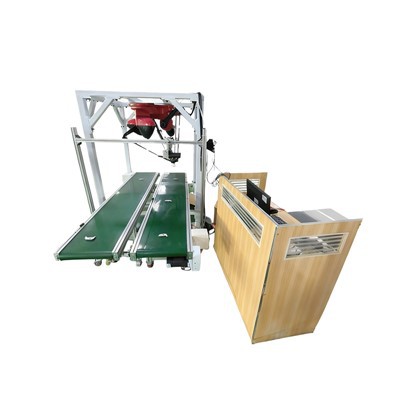
If you’re ready to stop dealing with the noise, the turnover, and the inconsistent welds, I’d love to chat. We can bring a sound level meter to your shop, test your current operation’s noise levels, and show you exactly how our flexible systems will reduce that noise. No sales pitch, no pressure, just real data that you can take back to your team and your safety manager. The future of welding isn’t loud and manual—it’s flexible, precise, and quiet, and it’s waiting for you.
Stamping Robot Reference
- Occupational Safety and Health Administration. (2023). Noise and Hearing Conservation. U.S. Department of Labor.
- American Welding Society. (2022). Noise Levels in Welding Operations and Robotic Welding Noise Mitigation. AWS Welding Journal.
- International Organization for Standardization. (2021). ISO 11201: Acoustics – Noise Emitted by Machinery – Noise Emitted in Workplaces and Other Areas of Interest. ISO.
- Flexible Robotic Systems Association. (2023). 2023 State of Robotic Welding Noise Reduction in Manufacturing. FRSA Industry Report.
Dongguan Chuanglida Intelligent Equipments Co., Ltd.
Address: Room 201, Building 2, No. 61, Shachang 1st Road, Dalang Town, Dongguan City, Guangdong Province
E-mail: haoguangli001@outlook.com
WebSite: https://www.boruntestech.com/
